
- Running an auto repair workshop involves much more than fixing vehicles. Workshop owners must manage employees, monitor repair jobs, attend to customers, control expenses, and ensure that daily activities run smoothly.
When these responsibilities are not properly managed, small problems can quickly become bigger operational challenges. Repair jobs may be delayed, customers may receive poor service, employees may become less productive, and important business information may get lost.
One way to prevent this is to establish a daily management routine.
Having a clear routine helps workshop owners stay informed about what is happening in their business and identify problems before they affect operations.
Here are 10 essential daily management tasks every auto repair workshop owner should pay attention to.
1. Review All Vehicles Currently in the Workshop
Start each day by checking the vehicles currently at your workshop.
Know which vehicles are awaiting inspection, diagnosis, customer approval, spare parts, or completed repairs.
This gives you a clear picture of the workshop's workload and helps you determine which jobs need immediate attention.
Without a proper overview, it is easy for vehicles to remain unattended or for important repair jobs to be forgotten.
2. Check the Progress of Ongoing Repair Jobs
Knowing that a repair job has been assigned is not enough. You also need to understand how much progress has been made.
Review ongoing jobs and find out whether technicians are working according to the expected plan.
Identify jobs that have stalled and investigate the reasons.
A repair may be delayed because:
The required spare part is unavailable.
The diagnosis is taking longer than expected.
Additional repairs require customer approval.
A technician needs assistance.
The assigned mechanic has other pending tasks.
Regular job reviews help workshop owners address these issues early.
3. Assign Tasks Clearly to Your Mechanics
Every mechanic should understand the work they are expected to complete.
Avoid assigning jobs vaguely or depending entirely on verbal instructions. Important details can easily be forgotten, especially when several vehicles are being repaired simultaneously.
When assigning a task, communicate the vehicle involved, the required repair, and any important instructions.
Also make sure the assigned technician understands the responsibility.
Clear task allocation improves accountability and helps prevent confusion among workshop staff.
4. Follow Up With Employees
Workshop owners should maintain regular communication with their employees throughout the day.
Check whether technicians understand their assignments, have the tools they need, and are making progress.
If a mechanic is experiencing difficulties, provide the necessary support.
Following up does not mean constantly disturbing employees. It means remaining aware of the work being done and ensuring that everyone understands their responsibilities.
5. Review New Customer Requests
Every new customer interaction is an opportunity to build trust and generate business.
Make time to review new repair requests, attend to customers bringing in vehicles, and understand their complaints.
Ensure that customer concerns are properly recorded before diagnosis begins.
This helps technicians understand what the customer has experienced and reduces the risk of overlooking important information.
6. Ensure Vehicle Inspections Are Properly Completed
Vehicle inspection is an important part of the repair process.
Before work begins, make sure vehicles are properly checked and that relevant findings are documented.
A structured inspection helps identify existing damage, visible faults, and other concerns that may require attention.
It also provides a useful record of the vehicle's condition when it arrived at the workshop.
Workshop owners should encourage technicians to take inspections seriously rather than treating them as unnecessary paperwork.
7. Monitor Estimates and Pending Customer Approvals
Some repair jobs cannot proceed until customers approve the recommended work and associated costs.
Review estimates that have been prepared but are still awaiting customer approval.
Follow up appropriately where necessary, and ensure that technicians understand which repairs have been authorized.
Do not allow employees to proceed with additional work simply because they assume the customer will approve it.
Proper approval procedures help prevent disagreements and protect the workshop's relationship with customers.
8. Communicate With Customers About Delays
Not every repair will be completed exactly when expected.
Sometimes, additional faults are discovered, parts are unavailable, or a repair requires more time than initially anticipated.
When delays occur, communicate with affected customers.
Explain the reason for the delay and provide a realistic update on the repair progress.
Customers are generally more understanding when they receive honest information instead of being left wondering what is happening with their vehicles.
9. Check Completed Jobs Before Vehicles Leave
Before handing a vehicle back to its owner, confirm that the required repair work has been completed.
Depending on the nature of the job, this may involve checking the repaired components, reviewing the technician's work, clearing relevant diagnostic issues, and carrying out a road test.
Ensure that the original customer complaint has been addressed and that any outstanding concerns have been communicated.
A proper final check helps reduce avoidable mistakes and protects your workshop's reputation.
10. Review the Day's Activities Before Closing
At the end of each working day, take a few minutes to review what happened.
Ask yourself:
How many new vehicles came into the workshop?
Which repair jobs were completed?
Which jobs are still pending?
Are there vehicles waiting for customer approval?
Are any repairs delayed because of unavailable parts?
Which tasks should receive attention tomorrow?
This simple review helps you prepare for the next working day instead of starting without knowing what needs to be done.
How Mektrics Can Help You Manage Daily Workshop Activities
Keeping track of all these responsibilities manually can become overwhelming, especially when your workshop handles several vehicles and employees.
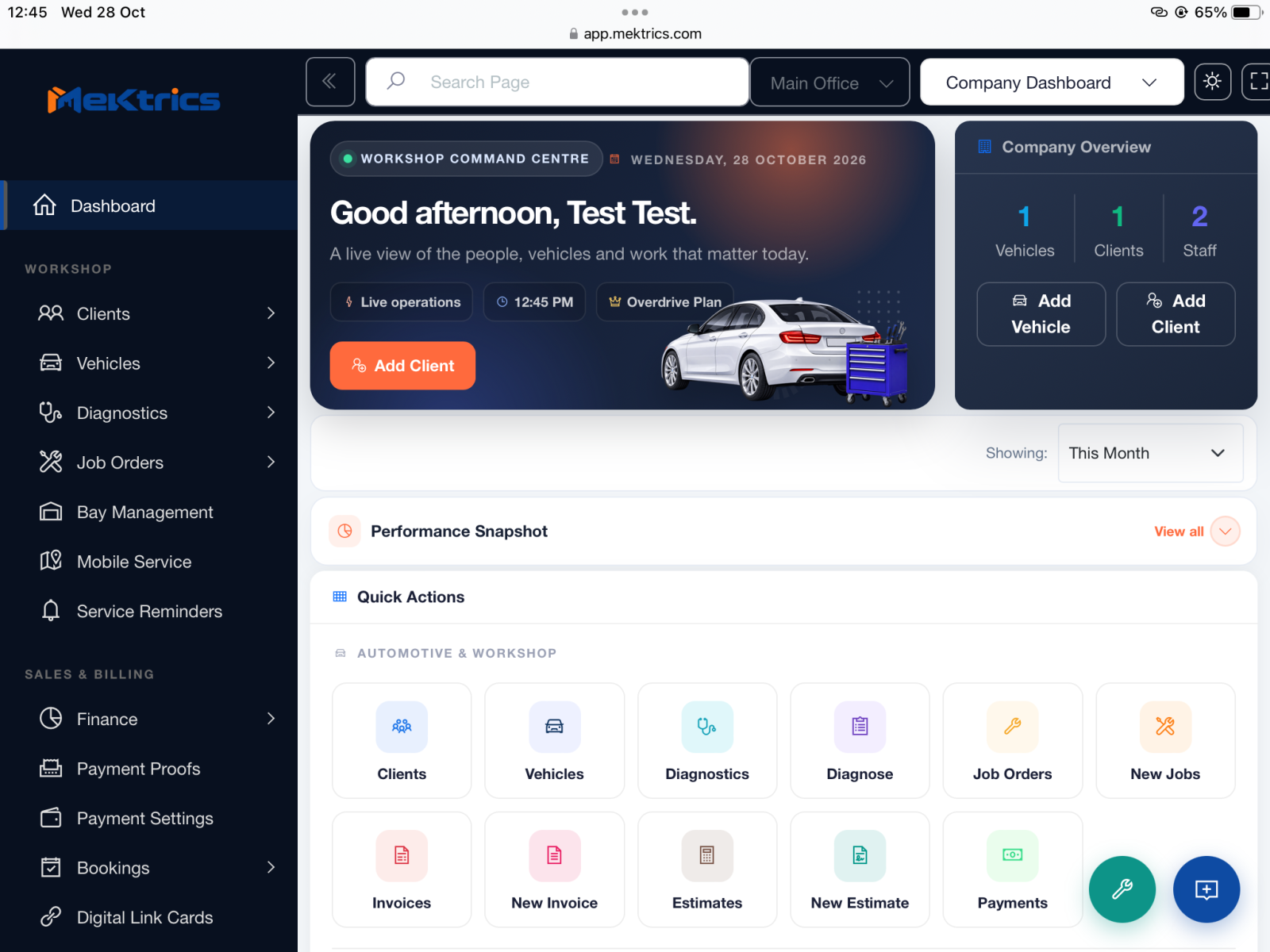
Mektrics provides an organized digital workflow for managing important workshop activities.
With Mektrics, you can:
Manage customer and vehicle records.
Carry out and document vehicle inspections.
Follow an organized vehicle diagnosis process.
Prepare estimates for customers.
Manage job orders and repair progress.
Assign tasks to employees and track job activities.
Instead of depending entirely on notebooks, scattered papers, and memory, your workshop can keep important repair information organized in one system.
This makes it easier to understand what is happening in the workshop and manage daily operations more effectively.
Conclusion
Effective workshop management starts with consistent daily habits.
By reviewing ongoing jobs, assigning tasks clearly, monitoring employees, checking inspections, following up on estimates, and reviewing completed repairs, you can maintain better control over your workshop.
You do not need to wait until your business becomes large before introducing proper management routines.
Start with these daily practices, remain consistent, and use the right tools to keep your operations organized.
Want to manage your workshop with less paperwork and better organization? Explore Mektrics and discover how digital workshop management can simplify your daily operations. Visit mektrics.com.

0 Comments